
Aztec Gods Magic Mushroom

Original price was: $180.00.$160.00Current price is: $160.00.
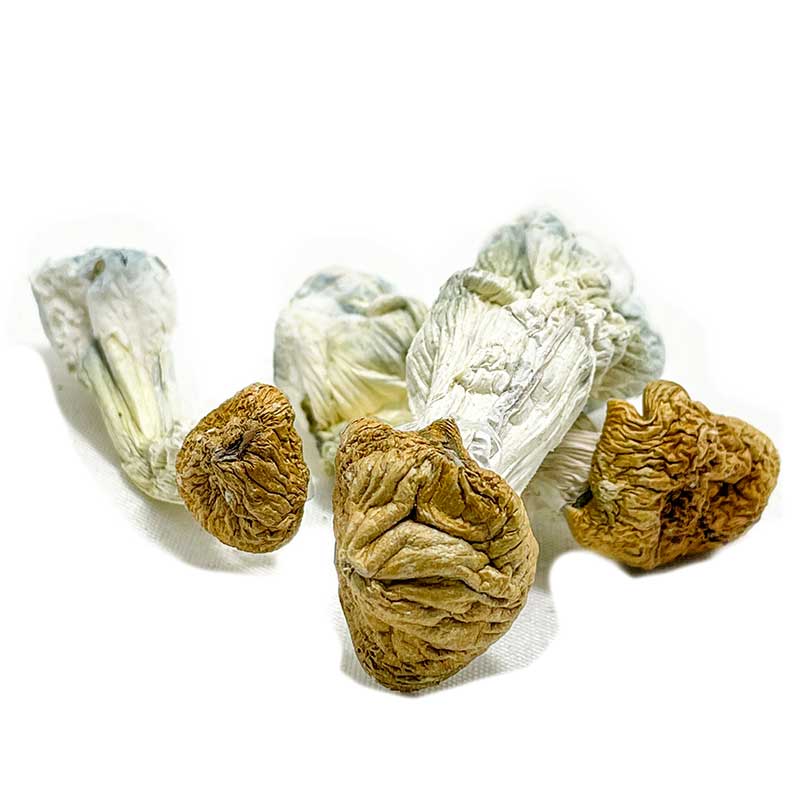
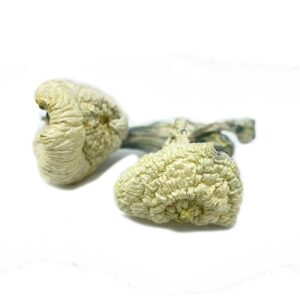
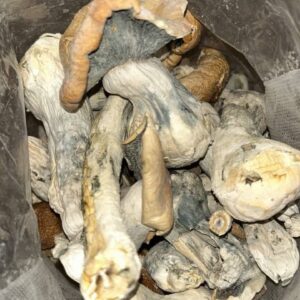
Aztec Gods Magic Mushroom, also known as “Teonanacatl” or “Flesh of the Gods,” is a type of psilocybin mushroom that has been used for centuries in Mesoamerican spiritual practices. The Aztecs believed these mushrooms held sacred powers, allowing them to communicate with gods and ancestors.
1. Taxonomy and History
• Scientific Name: Psilocybe aztecorum R. Heim.
• Discovery: It was first scientifically documented by French mycologist Roger Heim in 1956, based on specimens provided by R. Gordon Wasson.
• Historical Significance: It was used by the Aztec people of Central Mexico, who referred to it as teonanácatl (Nahuatl for “flesh of the gods”). It was used in sacred rituals for divination and healing.
2. Geographical Distribution and Habitat
• Location: It is native to the high-altitude volcanic regions of Central Mexico, specifically around mountains such as Popocatépetl, Iztaccíhuatl, and Nevado de Toluca.
• Elevation: It grows almost exclusively at high altitudes, typically between 3,200 and 4,000 meters (10,500 to 13,100 feet).
• Environment: It is found in subalpine regions, usually growing in pine forests (Pinus hartwegii). It grows among moss, dead leaves, and woody debris in cold, humid conditions.
• Season: The fruiting season usually occurs between August and October, coinciding with the end of the rainy season in Mexico.
3. Physical Characteristics
• Cap (Pileus): Small, ranging from 1.5 to 3 cm in diameter. It is convex to bell-shaped, often with a small nipple (umbo) in the center. The color is hygrophanous (it changes with moisture), appearing brownish-yellow when wet and fading to a pale straw or cream color when dry.
• Gills: Attached to the stem (adnate or adnexed). They are initially light brown and turn dark violet-brown as the spores mature.
• Stem (Stipe): 5 to 9 cm long and 2 to 4 mm thick. It is hollow, fibrous, and usually white to brownish.
• Bruising: Like most psilocybin-containing mushrooms, the flesh turns distinctively blue when bruised or handled, indicating the presence of psilocin.
• Spore Print: Purplish-brown.
4. Potency and Chemical Composition
• Compounds: It contains both psilocybin and psilocin.
• Strength: It is considered one of the more potent species of Psilocybe, generally reported to be stronger than the more common Psilocybe cubensis.
• Effects: The high potency leads to intense visual distortions, profound changes in perception, and deep introspective or spiritual experiences.
5. Variations
• Psilocybe aztecorum var. aztecorum: The standard variety found in Central Mexico.
• Psilocybe aztecorum var. bonetii: A variant that grows at slightly lower altitudes in different types of pine forests, featuring slightly smaller spores.
6. Identification Risks
• Look-alikes: In the wild, Psilocybe aztecorum can be confused with poisonous species of the genus Galerina (which can be fatal) or other non-psychoactive “Little Brown Mushrooms” (LBMs). Accurate identification usually requires spore print analysis and microscopic ex
amination.




Reviews
There are no reviews yet.