


Golden Teacher Magic Mushrooms


Original price was: $150.00.$130.00Current price is: $130.00.
Golden Teacher is one of the most popular and well-known strains of Psilocybe cubensis, a species of psychedelic (“magic”) mushrooms containing the psychoactive compounds psilocybin and psilocin.
Appearance and Identification
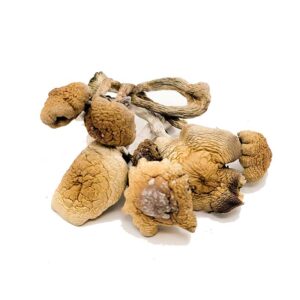
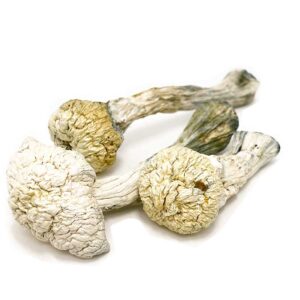
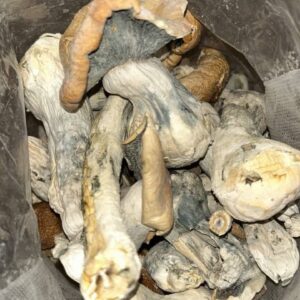
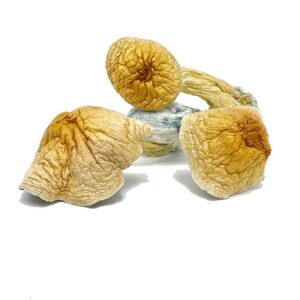
Golden Teachers feature medium-to-large fruiting bodies with distinctive golden-yellow to caramel-brown caps that often fade to a paler color at the edges as they mature. The caps start conical or bell-shaped and flatten out, sometimes with a slight central bump (umbo). The stems are typically white to yellowish, hollow, and bruise blue when damaged—a key indicator of psilocybin presence due to oxidation. Gills are grayish at first, turning purplish-black as spores mature, and a membranous ring (annulus) is often visible on the stem.
Dosage Guide (Dried Mushrooms)
Doses are highly individual and depend on body weight, tolerance, mindset (“set”), and environment (“setting”). General guidelines for a typical cubensis strain like Golden Teacher:
Microdose: 0.1–0.3 g (subtle mood/cognitive effects, no hallucinations)
Low/Threshold: 0.5–1.0 g (mild euphoria, enhanced senses)
Moderate: 1–2.5 g (noticeable visuals, introspection—common starting point for beginners)
High/Strong: 2.5–3.5+ g (intense visuals, potential ego dissolution; “heroic” doses like 5 g are for experienced users only)
Fresh mushrooms contain much more water (~90%), so doses are roughly 10x higher by weight. Lemon tek (soaking in lemon juice) or tea can intensify and shorten the onset. Start low and go slow, especially if new.
Cultivation and History
Golden Teachers are favored by home growers for their vigorous growth, high yields, and resilience—even beginners report success. They thrive on common substrates and produce large, consistent fruits. The strain’s exact origins are unclear (like many cubensis cultivars), but it became widely circulated in spore-trading communities and is now a “classic” benchmark.
Legality and Risks
Psilocybin and psilocin are controlled substances in most countries (e.g., Schedule I in the US, illegal for possession/production/sale in Canada unless specially authorized). Some jurisdictions have decriminalized personal use or allow supervised therapeutic settings, but laws vary and change—check your local regulations. In places like Cameroon, they fall under general drug controls.
Risks include:
Bad trips — anxiety, paranoia, or confusion (mitigated by a safe setting and trusted sitter).
Physical effects — nausea, muscle tension, increased heart rate.
Psychological vulnerability — can exacerbate underlying mental health issues (e.g., avoid if history of psychosis).
Misidentification in the wild — leading to poisoning from toxic mushrooms.
Variable potency — even within the same batch.
Psilocybin has low addiction potential and is being researched for therapeutic uses (depression, anxiety, addiction), but it is not risk-free and lacks approved medical products in most places.
If you’re considering use, prioritize harm reduction: test your source if possible, use in a controlled environment, and consult reliable resources or professionals where legal. For cultivation info, many educational guides exist online (where permitted).
Always prioritize safety, legality, and informed decisions. If this is for educational or research purposes, that’s great—psychedelic mycology is a fascinating field!




Reviews
There are no reviews yet.