

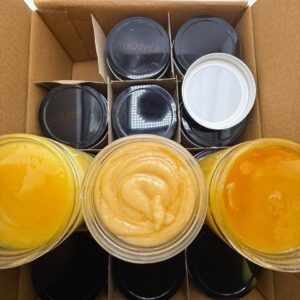
Unlabeled wax badder jars( licensed and clean

Original price was: $700.00.$600.00Current price is: $600.00.
Wax badder (also spelled batter or commonly referred to alongside budder) is a type of high-potency cannabis concentrate in the “wax” family. It features a soft, whipped, creamy texture resembling cake batter, frosting, or thick peanut butter.135fc4
It is prized for its flavorful terpene profile, ease of handling, and strong effects from concentrated cannabinoids, primarily THC.
Chemical Composition and Properties
Badder is an extract rich in cannabinoids (typically 70–90% THC, sometimes higher) and terpenes. The creamy consistency results from controlled agitation (whipping) during or after solvent purging, which incorporates air and alters crystallization. Colors range from light blonde/yellow to amber or gold, depending on the strain, starting material (fresh-frozen for “live” versions or cured flower), and processing.
It is malleable and scoopable, unlike brittle shatter or drier crumble. It falls under hydrocarbon or solventless extracts, with variants like live resin badder (from fresh-frozen cannabis) preserving more terpenes for better flavor and aroma.
How Wax Badder Is Made
Production typically involves:
Extraction — Cannabis trichomes are dissolved using solvents like butane (BHO), propane (PHO), CO₂, or ethanol in a closed-loop system. Solventless methods use rosin pressing after creating bubble hash.
Purging — Residual solvents are removed via vacuum and heat.
Whipping/Agitation — The purged oil is whipped at controlled temperatures to create the airy, batter-like texture. This differs from shatter (no agitation, glass-like) or crumble (more brittle).93975c
Live badder uses fresh-frozen plants to capture peak terpenes. The process requires specialized lab equipment for safety and purity; homemade versions risk residual solvents and explosions.
Differences from Similar Concentrates
Badder vs. Budder: Often used interchangeably; badder is typically looser/more oily (cake batter), while budder is smoother and more butter-like. Both are whipped waxes.
Vs. Shatter: Shatter is brittle and glass-like (no whipping); badder is softer and more pliable.
Vs. Crumble/Honeycomb: Crumble is drier and more brittle.
Vs. Wax (general): Badder is a specific soft, whipped subtype of wax


Reviews
There are no reviews yet.