
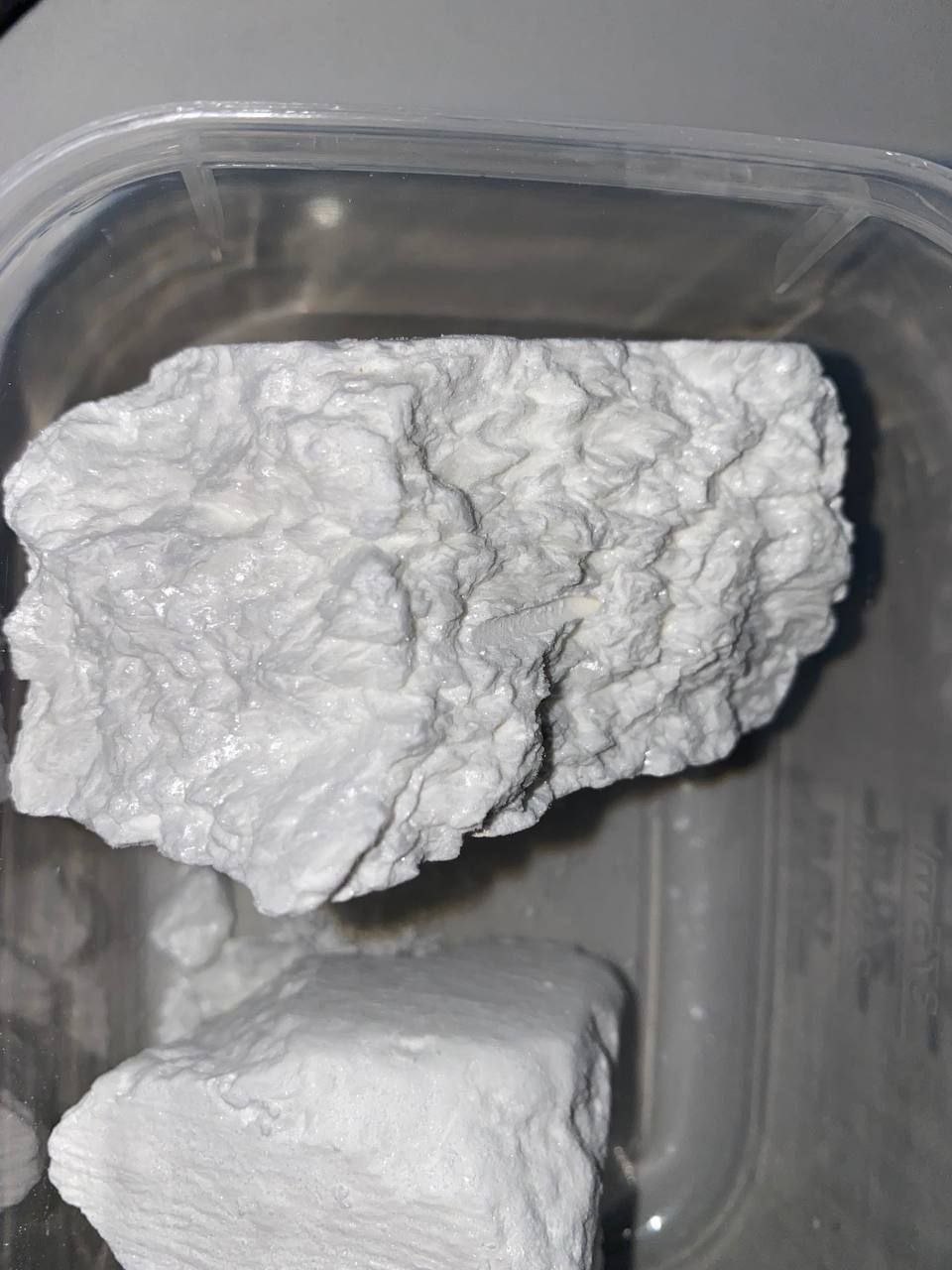
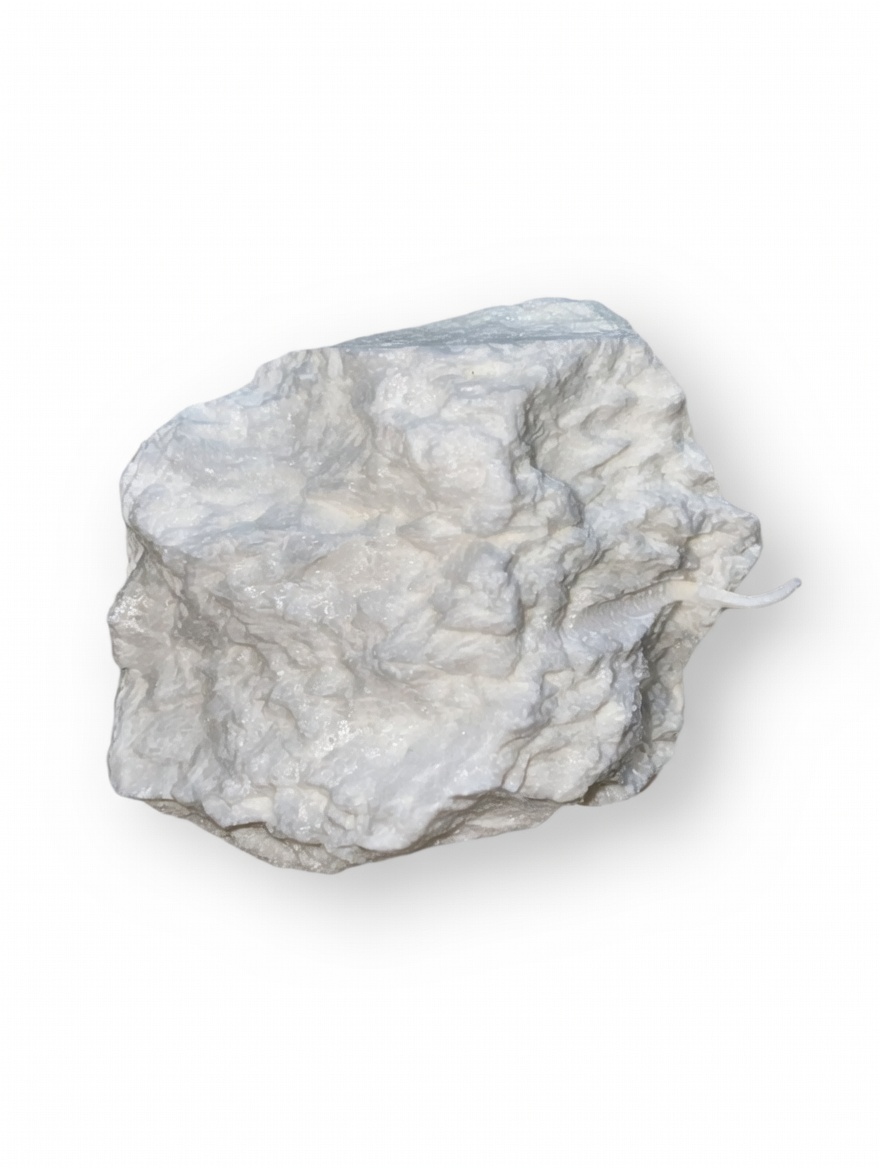
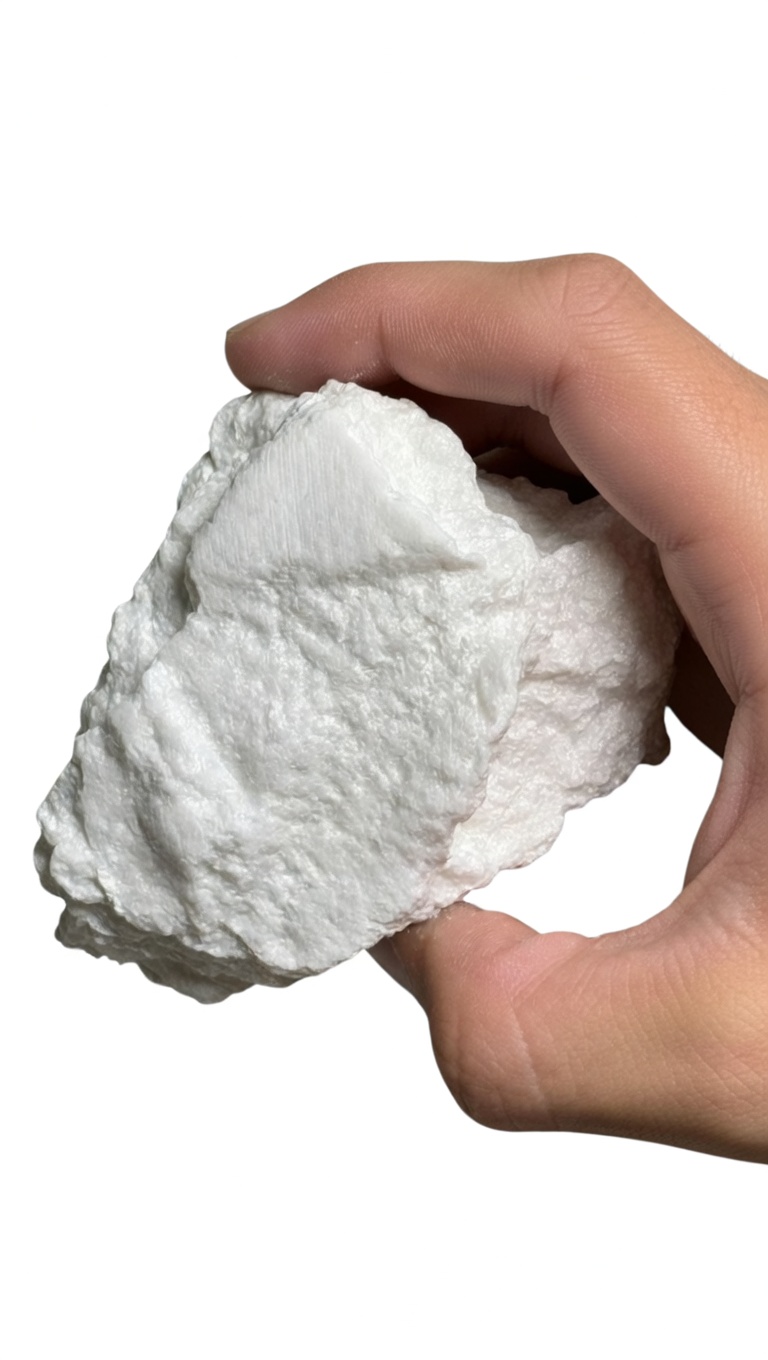
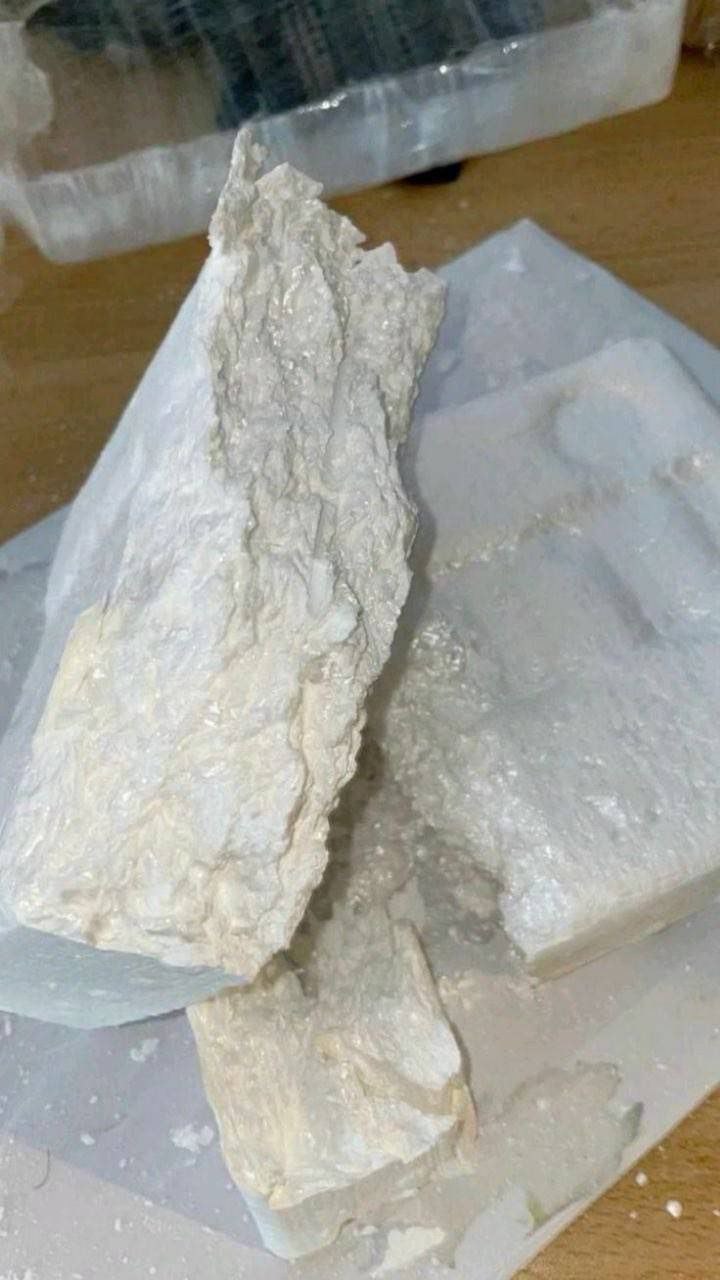


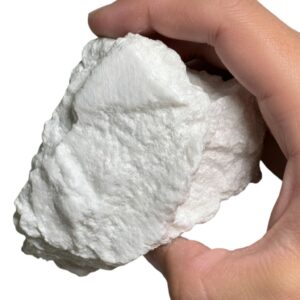
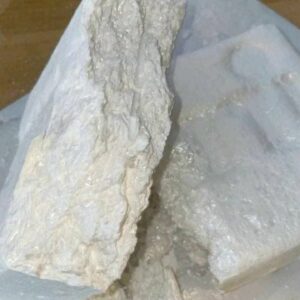
Cocaine
Original price was: $140.00.$90.00Current price is: $90.00.
Cocaine is a powerful central nervous system stimulant and tropane alkaloid extracted from the leaves of the coca plant (Erythroxylum coca and E. novogranatense), native to South America. It is best known as an addictive recreational drug but has limited, highly restricted medical applications as a topical local anesthetic.
Cocaine’s chemical formula is C₁₇H₂₁NO₄ (molar mass 303.358 g·mol⁻¹). Its systematic IUPAC name is methyl (1R,2R,3S,5S)-3-(benzoyloxy)-8-methyl-8-azabicyclo[3.2.1]octane-2-carboxylate. In pure form, it is a white, pearly crystalline powder with a bitter taste. It is a weak base that readily forms water-soluble salts, most commonly cocaine hydrochloride. It has a melting point of 98 °C and limited water solubility (1.8 g/L at 22 °C). Total chemical synthesis is possible but complex and not used commercially; it is produced naturally via biosynthesis in the coca plant. Street cocaine is often cut with adulterants such as levamisole.
History
Indigenous peoples in South America have chewed coca leaves for at least 8,000 years for stimulation, endurance, and medicinal purposes. Spanish colonizers initially banned but later taxed and encouraged its use. The pure alkaloid was isolated in 1855 by Friedrich Gaedcke and refined by Albert Niemann. In the late 19th and early 20th centuries, cocaine was widely used in Western medicine as a local anesthetic and appeared in tonics, wines, and early formulations of Coca-Cola. Its abuse potential led to strict regulation in the early 20th century. Modern illicit production and trafficking surged in the 1970s–1980s, dominated by cartels in Colombia, Peru, and Bolivia.


Reviews
There are no reviews yet.